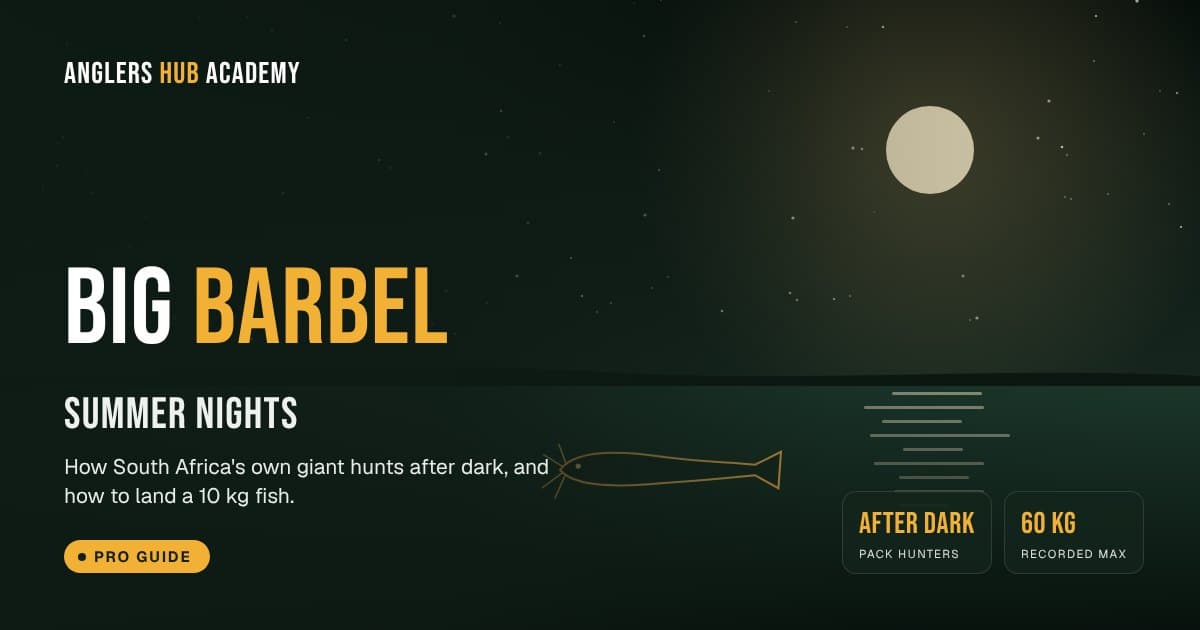
Every summer somebody fishing for carp after dark hears the alarm scream, watches the rod hoop over and feels line pour off the reel in a way no carp manages. Ten minutes later a huge, flat, whiskered head slides over the net. The barbel, or sharptooth catfish, is the biggest freshwater fish most South African anglers will ever hook, and summer nights are when it is easiest to find.
Unlike carp and bass, barbel belong here. They are one of our own indigenous fish, found naturally in rivers, dams and pans across most of the country. This guide explains how they live, why summer nights are their time, and how to target the big ones on purpose instead of by accident.
In 30 seconds
- Barbel feed mostly at night, by touch, taste and smell, not sight.
- They hunt in packs, driving small fish into weedy shallows. Fish the shallow shelf next to deep water.
- They breed after heavy rain on dark, calm nights in newly flooded grass.
- Fresh, oily, smelly baits on a running rig with strong line and a big, strong hook.
- Handle with care: mind the sharp side-fin spines, support the belly and put the big breeders back.
Facts are marked by how sure the science is. Where something is well proven, we say so. Where it is angler experience, we say that too.
Sign in to keep reading
Create a free AnglersHub account or sign in to read more of this guide. The full guide is part of AnglersHub Pro.
You come straight back to this guide afterwards.
Meet the barbel
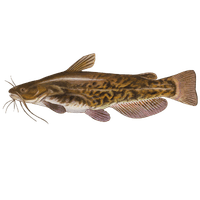
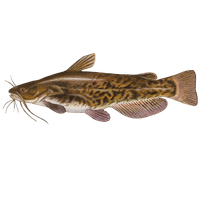
60 kg largest recorded, 170 cm long
8 to 35 °C water it can live in
15+ years lifespan
Air it can breathe at the surface
- Name: sharptooth catfish, Clarias gariepinus. In South Africa almost everyone calls it barbel. It is not the same fish as the European barbel.
- Range: one of the most widespread freshwater fish in Africa. In South Africa it occurs naturally north of the Orange River system in the west and the Umtamvuna River in the east (SANBI), and has been moved into many waters outside that range.
- Size: commonly up to about 90 cm, with a recorded maximum of 170 cm and 60 kg (FishBase). Fish over 10 kg come out of many of our dams every summer.
- Toughness: handles water from about 8 to 35 °C, muddy water and very low oxygen (FishBase).
A fish that breathes air
Barbel have an extra breathing organ above the gills, made of branching, tree-like tissue in air chambers. They gulp air at the surface and use it when the water runs short of oxygen (SANBI, well established). On hot, still nights you will see them swirl and gulp at the surface.
That matters in summer. When warm, low-oxygen water pushes carp and bass into the top layer, barbel can keep feeding where other fish cannot. They can even survive for a time buried in mud when pools dry up.
How barbel find food in the dark
- Four pairs of whiskers (barbels) covered in taste buds. Barbel feel and taste their way along the bottom.
- A strong sense of smell, which is why fresh, oily baits work so well.
- The lateral line, pressure sensors that pick up movement and vibration in the water.
- An electric sense. Like many catfish, barbel can sense weak electric fields (FishBase). (Moderate: how much they use it to hunt is not well studied.)
Eyesight matters little, which is why barbel feed happily in muddy water and on the darkest nights.
Keep reading with AnglersHub Pro
The other 9 sections of this guide are for Pro members. Pro also unlocks Billy the Bot, Fish ID, the live weather map and your personal bite windows.