If you only learn one knot this year, make it the Palomar. It takes about ten seconds once you have done it a few times, it works on braid, mono and fluorocarbon, and it keeps most of your line's strength.
In 30 seconds
- Double about 15 cm of line and push the loop through the hook eye.
- Tie a loose overhand knot with the doubled line.
- Pass the loop over the hook, wet it, pull tight, trim.
- Use it for hooks, swivels, snaps and small lures. Skip it for big crankbaits.
About 90% of line strength kept (angler tests)
Easy one of the first knots to learn
10 sec to tie once you have it
All lines braid, mono, fluorocarbon
Watch it tied
Video coming soon
No sound or no signal at the dam? The step-by-step version below has everything you need.
Keep reading for free
Create a free AnglersHub account or sign in to read the rest of this guide. It takes less than a minute and opens every free guide in the Academy.
You come straight back to this guide afterwards.
Tie it step by step
It is all one line. We colour the main-line half green and the tag half gold so you can follow each strand.
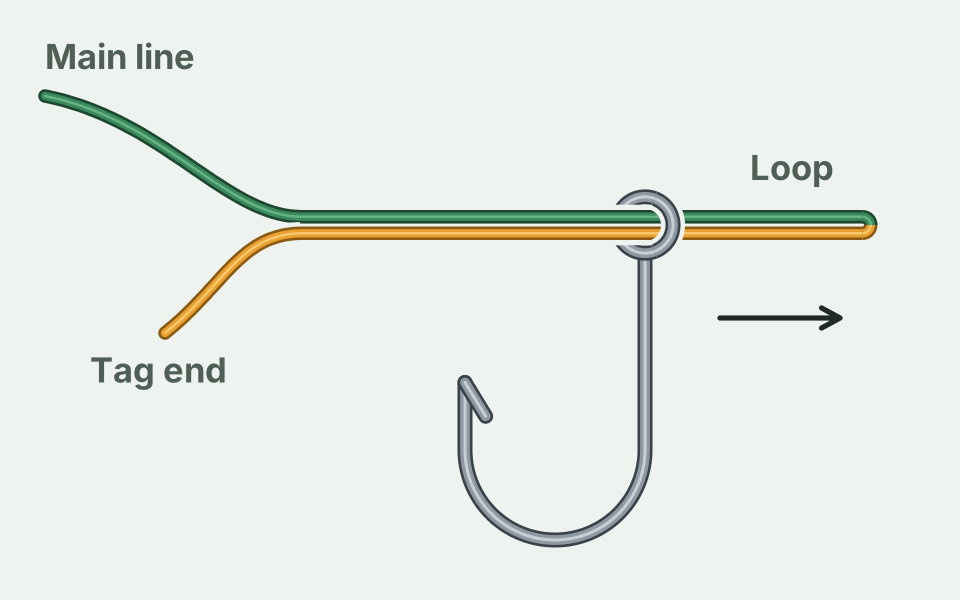
Double and thread
Fold about 15 cm of line back on itself and push the loop through the eye.
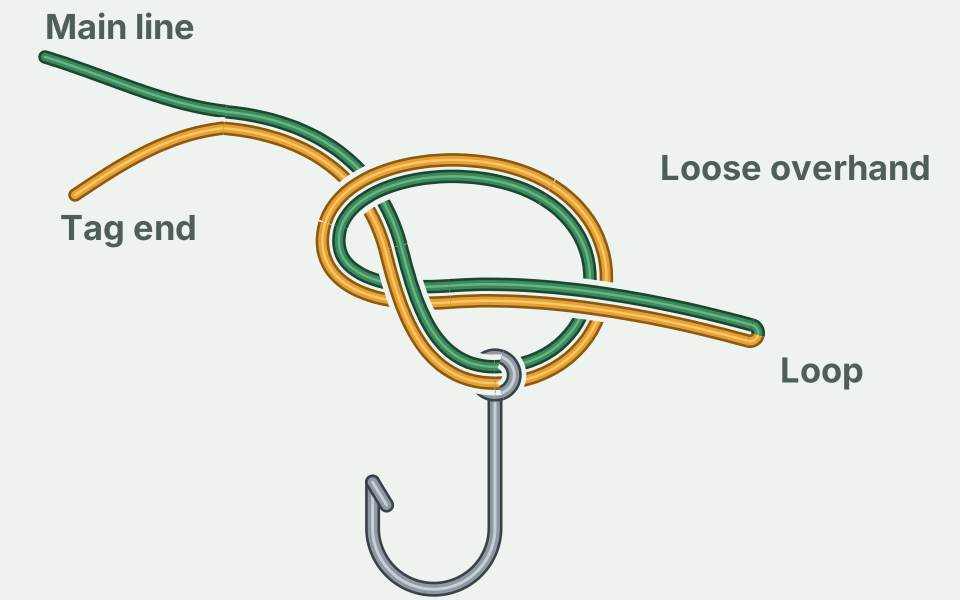
Loose overhand
Tie a simple overhand knot with the doubled line. Let the hook hang. Do not twist the two strands.
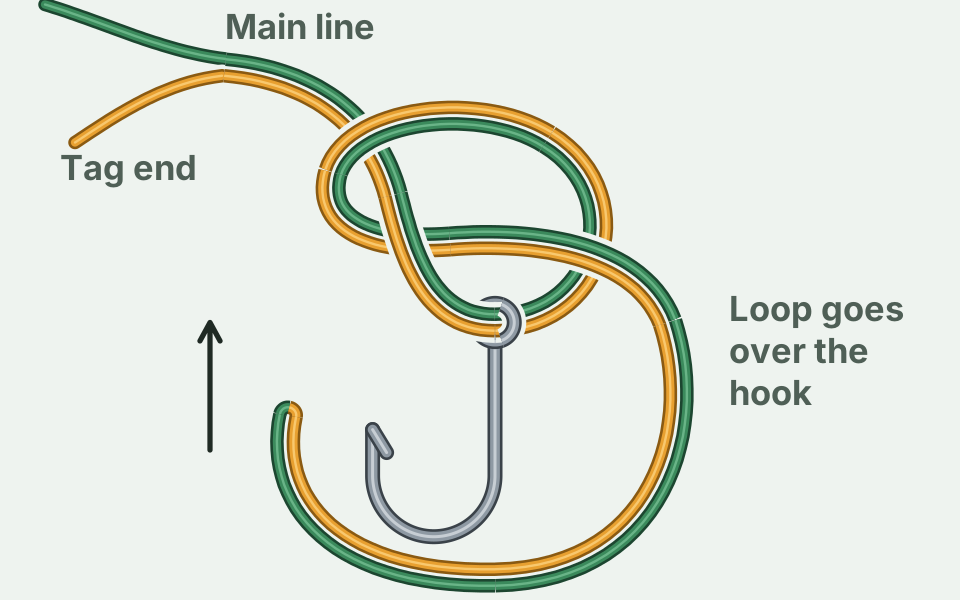
Loop over the hook
Pass the end of the loop right over the hook (or lure) so it sits above the eye.
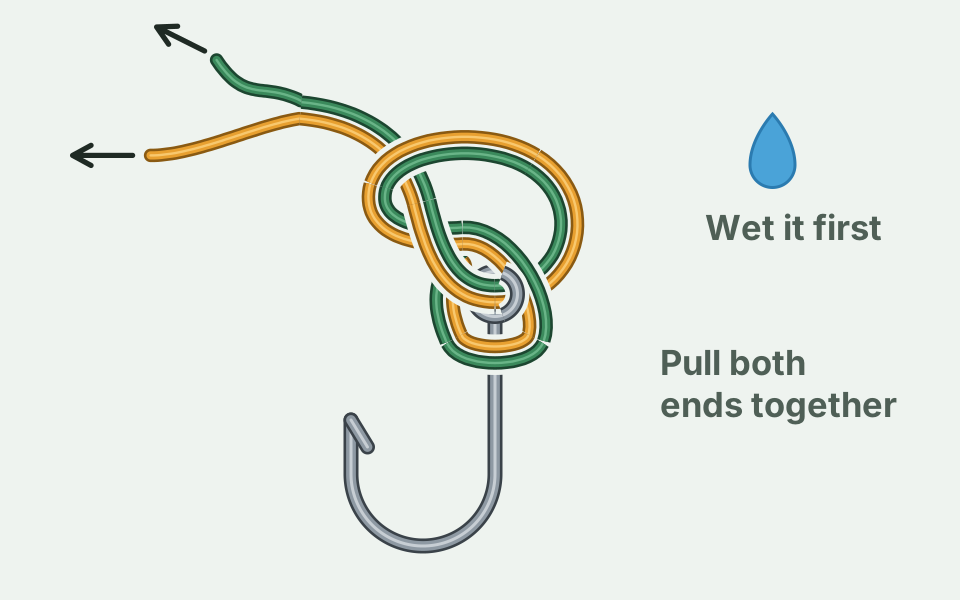
Wet and tighten
Wet the knot, then pull the main line and tag together. The knot slides down onto the eye.
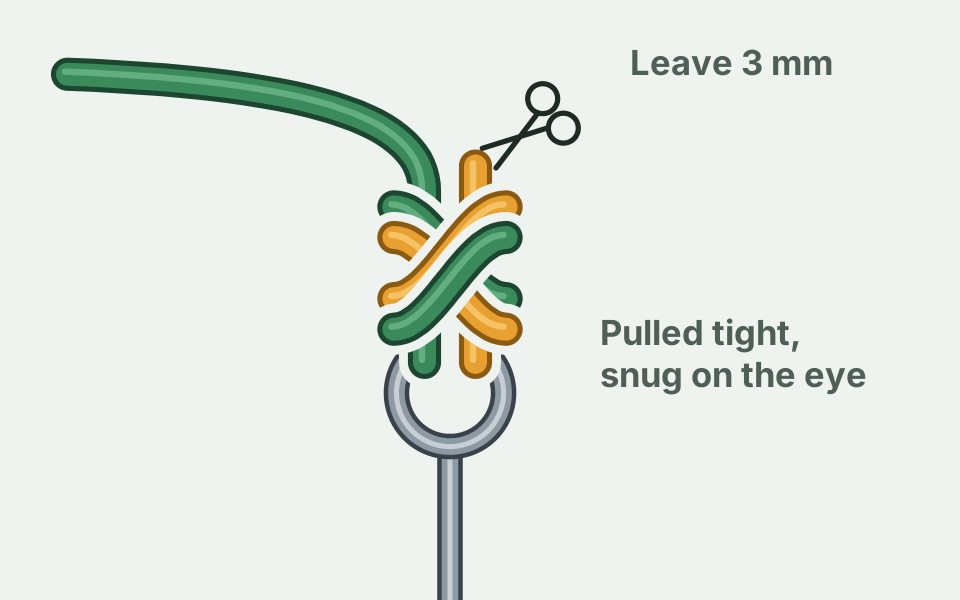
Trim
Cut the tag end, leaving about 3 mm. Done.
Most common mistake: twisted strands in step 2. If the two lines cross over each other, the knot bites into itself and breaks early. Keep them flat and side by side.
Drop shot trick: leave a long tag (40 cm or so), then thread the tag back down through the hook eye from the top. The hook stands out straight and the tag becomes your sinker line.
When to use it
Palomar
- Hooks, swivels, snaps
- Drop shot rigs
- Braid straight to a hook
- Small soft plastic and jig heads
Pick another knot
- Big crankbaits with trebles (the loop catches)
- Joining two lines (use the Albright or FG)
- When you are short on line
Myth: the Palomar is only for braid.
Fact: it works just as well on mono and fluorocarbon. Wetting it before you pull tight matters more on those lines, because friction heat weakens them.
- Strands flat, not twisted
- Knot wet before tightening
- Knot sits snug on the eye
- Tag trimmed to about 3 mm
- Test pull before you cast
Final thoughts
Practise it five times at home with a hook and some old line, and you will tie it in the dark by the weekend. Next in the knot series: the Albright knot, for joining braid to a thicker leader. Want the full set? See the fishing knots every angler needs.