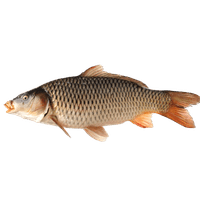
Carp live in almost every dam in South Africa, from the Vaal and Hartbeespoort to small farm dams in the Free State. That is the good news. The catch is that a carp is a grazer that wanders the dam looking for food, so the swim you pick matters more than anything you tie on.
This part covers the paperwork, how to pick a dam for your first carp, the signs that show you where carp are feeding, and eight places to set up on almost any dam.
In 30 seconds
- Get legal: a provincial licence for public water, a day ticket or permission for private water, and read the rules board.
- Start easy: a well-stocked carp venue or a small dam with plenty of fish beats a huge public dam.
- Look first: spend 15 minutes watching for bubbles, mud clouds and rolling fish before you set up.
- Follow the wind: in the warm months, the bank the wind blows into is usually the best place to start.
- Fish features: reed margins, the bottom of drop-offs, inflows, points and warm shallow bays.
15 min of looking before you set up
8 places to check on any dam
30 to 60 m is a comfortable first cast
Wind in your face in summer
Get legal first
South Africa's angling rules are set by each province. Before your first trip:
- Public water (state dams, rivers, nature reserves): you need a provincial angling licence. Buy it at the post office, online, from your provincial nature conservation office or from many tackle shops, depending on the province. Some reserves also charge an entry fee.
- Private water (farm dams, resorts, carp venues): a licence may not be needed, but you need permission, usually a day ticket. Ask the owner what they require.
- Read the rules board. Carp venues set their own rules: how many rods, whether night fishing is allowed, which baits are banned, and whether an unhooking mat and a big landing net are compulsory.
Tip: search fishing spots for carp in your province, or open the map and sort by distance. Many listings show day fees and venue rules. A local tackle shop will know which dams are fishing well this month.
Unlock Part 3 for free
Create a free AnglersHub account or sign in to read the rest of this part and every other part of the course. Your progress is saved to your account, so you can pick up on any device.
You come straight back to this guide afterwards.
Pick the right water
For your first carp, choose numbers over size. A water full of 2 to 5 kg carp will teach you more in one day than a big public dam where the fish are spread over thousands of hectares.
Carp venues (start here)
Private dams stocked and run for carp anglers, with day tickets, numbered swims (pegs) and toilets. The fish are used to pap and millies, and the owner will tell you where they are biting.
Small farm and club dams
Quiet, often full of carp that see few anglers. Get permission, and check the depth and bank access before you carry everything down.
Big public dams (later)
Home of the biggest carp, but the fish roam a huge area, the wind can be fierce and you may need long casts. Great once you can read water.
Read the signs: where carp are feeding
Carp give themselves away. They feed by rooting in the mud for bloodworm, snails and seeds, sucking up mud with the food and blowing it out through their gills. That leaves signs you can see from the bank, especially early in the morning and in calm water. Stand back from the edge, wear polarised glasses and watch for 15 minutes before you choose where to sit.
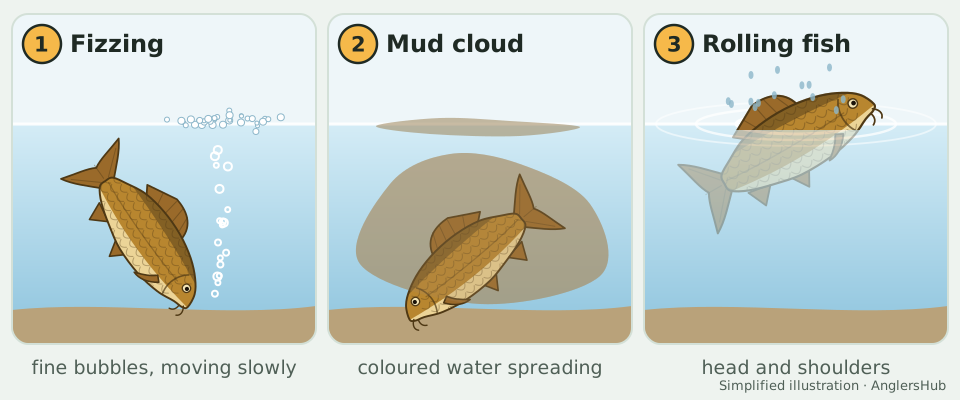
- Fizzing: patches of fine bubbles, often moving slowly as the fish feeds along. Big single bubbles that pop up in one place are usually just gas from rotting weed.
- Mud clouds: patches of coloured water in otherwise clear water, made by carp digging in the bottom.
- Rolling and crashing: a carp showing its head and shoulders, or leaping clear. Fish that show often, at dawn and dusk especially, are usually close to where they are feeding.
- Moving reeds and swirls: reed stems knocking about on a calm day, or swirls in the shallows, mean fish moving through the margins.
Myth: carp only live in the deep middle of the dam.
Fact: carp travel. Tracking studies show them moving between deep and shallow water on a daily cycle, and they feed along margins and drop-offs far more than anglers expect. Often the best spot is closer than you think.
Eight places to set up on any dam
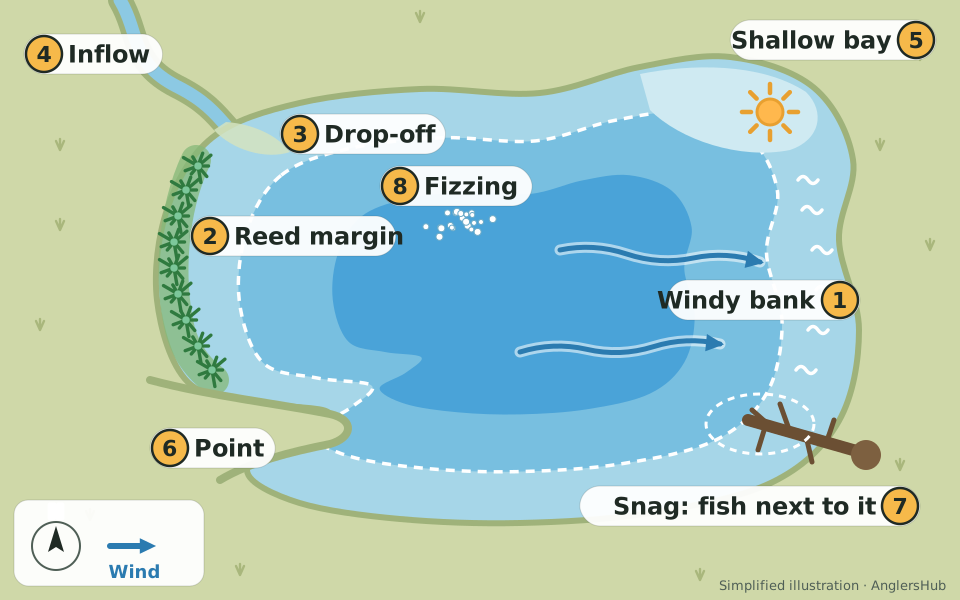
- Windy bank. In the warm months, a steady wind blowing onto a bank pushes warm surface water, food and oxygen there, and carp follow it. Sit with the wind in your face. In winter a cold wind can do the opposite; then try the sheltered side.
- Reed margin. Carp patrol the outer edge of reeds and feed on the snails and insects that live there. Cast a few metres off the edge rather than into it, and keep quiet: carp hear footsteps and banging on the bank.
- Bottom of the drop-off. Many dams have a shallow shelf near the bank that slopes away into deeper water. Food rolls down and collects at the bottom of that slope, and carp use it like a road.
- Inflow. A stream or pipe brings in fresh water, food and oxygen. It is a strong spot after rain and on hot, still days when the rest of the dam is short of oxygen.
- Shallow bay. Shallow water warms up fastest. In spring and on sunny winter afternoons, carp move into warm bays to feed. In the heat of summer, they come in at dawn and dusk.
- Point. A point reaching into the dam lets you cover water on both sides, and carp travelling along the bank pass it. Fish either side of the tip.
- Snag. Sunken trees and old fences hold carp because they feel safe there. Fish a few metres off the snag, use 20 lb line, and be ready to stop the fish running into it. Never cast right into a snag.
- Fizzing. If you see feeding signs within casting range, that is your spot, wherever it is. Cast just past it and draw the rig back into it, so the splash does not land on the fish.
Most common mistake: setting up in the swim nearest the car park because it is easy. Walk the bank first. Ten minutes of looking often finds fish that everyone else walked past.
Choose your swim and your spot
Once you have picked a swim, choose one spot to fish in it, and stick to it all session. Papgooi works by building up a pile of pap in one place, and carp find it by smell and stay to feed. Spreading your casts around scatters the food and the fish.
- Within a comfortable cast. 30 to 60 m is plenty on most dams. A spot you can hit every time beats a far one you hit now and then.
- Pick a marker. Line the spot up with something on the far bank: a tree, a pole, a building. You will cast at that marker every time (Part 5).
- Clear of others. Leave plenty of room between you and the next angler, and never cast across their lines.
Level up: feel the bottom. Cast a bare 40 to 60 g spring or lead with no pap and no hooks, let it sink, hold the rod high and drag it slowly back along the bottom. Smooth and easy means firm silt or sand. A jerky, tapping feel means gravel or a hard patch. A heavy, catching drag means weed. Count how long it takes to sink, too. Carp love the edges of hard patches and weed, and that is where to cast your pap.
Level up: on a satellite view, look for the pale ring of shallow water round the edge of the dam. Where it suddenly narrows, the bank drops off fast, and a short cast puts you on the bottom of the slope.
Quick recap
- A provincial licence for public water, or permission and a day ticket for private water, and read the rules.
- Start on a well-stocked carp venue or a small dam with plenty of fish.
- Look for 15 minutes first: fizzing, mud clouds, rolling fish and moving reeds.
- Check the windy bank, reed margins, drop-offs, inflows, bays, points and snags.
- Pick one spot within a comfortable cast, line it up with a marker, and stick to it.
Pick your water
- 1Sort out your licence, or book a day at a carp venue.
- 2Choose a dam on AnglersHub and look at it on a satellite view.
- 3Pick two swims: one on the windy bank and one near a reed margin or drop-off.
Finished Part 3?
Saved on this device. Create a free account to keep it on every device.
Sources for this partShow
- FAO. Common carp: natural food and feeding habits (bottom feeding and bloodworm). Species profile.
- Sibbing, F.A. and others (1986). Food handling in the carp (why feeding carp leave mud clouds and bubbles). Journal of Zoology.
- Rhodes University, Department of Ichthyology and Fisheries Science. The biology and movement patterns of common carp in Groenvlei, South Africa. Thesis record.
- CapeNature. Angling licences. Permit page.